
Class 8 Grammar Worksheet on Comparing Views

Class 8 Grammar Worksheet on Comparing Views
Seeing Through Different Eyes: Comparing Perspectives for Grade 8
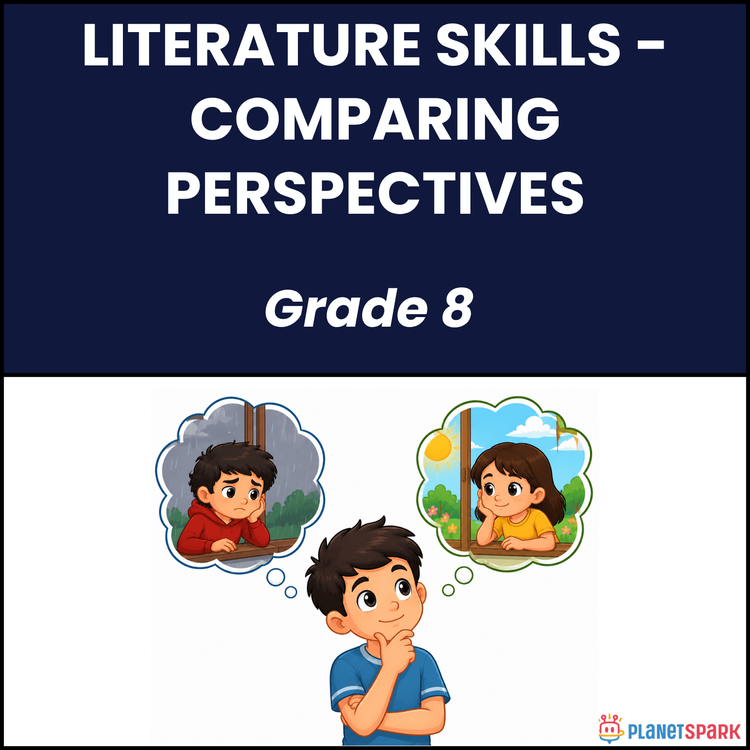
This Grade 8 worksheet on Literature Skills – Comparing Perspectives helps students understand how different narrators or characters can describe the same event in unique ways. Through engaging reading and analytical activities, learners explore how feelings, experiences, and viewpoints shape storytelling and influence reader understanding.
Why Comparing Perspectives Matters in Grammar and Literature?
Comparing perspectives is an important comprehension and analytical skill for Grade 8 learners because:
1. It helps students recognize how opinions and emotions affect storytelling.
2. It strengthens critical thinking and interpretation skills.
3. It teaches learners to compare contrasting viewpoints in literature and real life.
4. It improves reading comprehension by helping students identify tone, mood, and narrator bias.
5. It encourages empathy and deeper understanding of different experiences.
What’s Inside This Worksheet?
This worksheet includes five engaging literature and grammar-focused activities designed to strengthen analytical reading skills:
Exercise 1 – Multiple Choice Questions
Students answer comprehension-based MCQs about narrator viewpoints, emotions, and perspective differences in the festival passage. Example: “Why does the second narrator dislike the event?”
Exercise 2 – Match the Following
Learners match narrator details with the correct perspective or description. This helps students connect emotions, events, and viewpoints logically.
Exercise 3 – True or False
Students read statements related to the passage and identify whether each one is true or false based on the narrators’ perspectives.
Exercise 4 – Sort the Words
Students sort words and phrases into positive and negative perspectives. This activity builds understanding of tone, mood, and descriptive language.
Exercise 5 – Short Answer Questions
Learners answer detailed questions explaining how the narrators feel and how perspectives affect reader understanding.
✅ Answer Key (For Parents & Educators)
Exercise 1 – Multiple Choice Questions
1. b) Joy and celebration
2. c) Because of crowd discomfort
3. a) Crowd discomfort
4. c) The same event
5. b) They shape reader views
6. a) Tired
7. b) A festival
8. c) Noise and crowds
9. a) The celebration
10. c) It changes understanding
Exercise 2 – Match the Following
1. Joy and celebration → Happy atmosphere
2. Festival event → Shared experience
3. Noise and crowds → Loud surroundings
4. Positive viewpoint → Enjoys the festival
5. Reader opinion → Shapes reader view
6. Negative viewpoint → Highlights problems
7. Crowd discomfort → Uncomfortable setting
8. Same event → Different feelings
9. Celebration mood → Shows excitement
10. Different feelings → Contrasting opinions
Exercise 3 – True or False
1. True
2. False
3. True
4. False
5. True
6. True
7. True
8. False
9. False
10. True
Exercise 4 – Sort the Words
1. joy → Positive Perspective
2. noise → Negative Perspective
3. excitement → Positive Perspective
4. crowd discomfort → Negative Perspective
5. celebration → Positive Perspective
6. festival fun → Positive Perspective
7. happy mood → Positive Perspective
8. discomfort → Negative Perspective
9. crowded space → Negative Perspective
10. loud sounds → Negative Perspective
Exercise 5 – Short Answer Questions
1. The first narrator views the festival as joyful, exciting, colorful, and full of community spirit.
2. The two perspectives help readers understand that people can experience the same event differently based on their feelings and opinions.
3. The second narrator feels uncomfortable because of the loud noise, crowded streets, heat, and lack of personal space.
Help your child strengthen comprehension, literary analysis, and critical thinking skills with engaging Grade 8 perspective-based reading activities from PlanetSpark.
Frequently Asked Questions
It means analyzing different opinions on the same topic.
By examining arguments and perspectives.
It develops critical thinking skills.